Window and Flashing Leaks: How to Spot Them Early
Water does not need much of an opening. Learn the early signs of a window or flashing leak while it is still a small repair.
October 6, 2026 · 3 min read
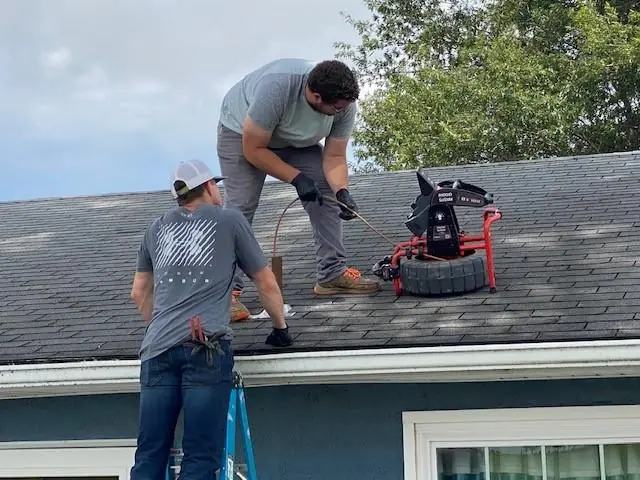
Water does not need much of an opening. A gap thinner than a pencil line around a window frame, or a bent piece of metal where a roof meets a wall, is enough to let rain into a house. The trouble is that the water rarely shows up where it came in. It runs down through the wall, soaks into wood and insulation, and appears as a stain somewhere else, often long after the damage has started.
Signs a window or flashing is leaking
Most leaks announce themselves quietly. Walk through the house, and look for these:
- Brown or yellow stains on the wall below a window, or on the ceiling near an exterior wall
- Paint that bubbles, peels, or flakes around a window frame
- Drywall that feels soft or crumbles when you press it gently
- Wood trim or sills that are darkened, swollen, or starting to rot
- A musty smell that gets stronger after rain
- Drafts, or fogging between the panes of a double-pane window
- Water on the sill after a storm
Any one of these can have another cause, such as condensation or a plumbing leak. Two or three together, especially if they line up with an exterior window or a roof edge, point to water getting in from outside.
Why small leaks get worse
Flashing is thin metal or membrane installed around windows, doors, chimneys, roof valleys, and the spot where a roof meets a wall. Its job is to direct water outward and down, over the siding or roofing, so it never reaches the wood framing. When flashing is missing, bent, rusted, or poorly overlapped, or when the sealant around a window dries out and cracks, water finds the gap and runs behind the siding.
From there it follows gravity and framing. It can travel along a stud or a joist and show up several feet from the real leak. Wet wood and insulation hold moisture for a long time, and a damp wall cavity is a good place for mold and rot to take hold. Northwest Arkansas gets heavy spring rain, strong storms, and humid summers. Wind-driven rain pushes water sideways into joints that stay dry in a gentle shower, and humidity slows the drying that would otherwise limit the damage. Each rain adds a little more, which is why a small leak ignored for a few seasons can become a framing repair.
What detection and repair involve
Good leak detection is mostly patience. It starts outside, with a close look at the caulk around the frame, the flashing above and beside the window, the siding laps, and anything higher up that dumps water onto the wall, such as a roof edge or a gutter. Inside, a moisture meter reads dampness in drywall and wood without cutting anything open. Sometimes a controlled water test, wetting one area at a time from the bottom up, shows which spot is the culprit. Because a stain is not always right below the leak, the source is often higher than people expect.
Repair depends on what is found. The simplest fix is resealing or replacing failed caulk. More often the flashing has to be replaced, which means removing some siding to get at it and reinstalling the pieces in the right overlapping order, upper pieces over lower ones, so water always runs outward. If water has been getting in for a while, damaged sheathing, framing, insulation, and drywall need to be cut out and replaced, and the finish repaired afterward. A window with a failed seal or a rotted frame may need replacement rather than patching. Fixing the stain without fixing the source only paints over the problem.
Waterproofing, and a habit that helps
Waterproofing is the broader idea: keeping water out of the building envelope in the first place. For windows it means correct flashing, sealant in the right places, and a drainage path behind the siding. It protects the structure, and it protects health too, since mold and mildew inside damp walls are a concern beyond the repair bill.
A simple habit makes a difference. After the next heavy rain, walk around the house with a flashlight. Look at the sills and the corners of ceilings, check the paint around the windows, and press gently on any blister. Catching it early is the difference between resealing a window and rebuilding a section of wall.
Trade Pro Construction does window and flashing leak detection and repair, along with waterproofing, exterior siding and masonry, and interior repairs after damage. Call (479) 309-8111 or request an estimate, and we will review it with you in person.
Trade Pro Construction, (479) 309-8111
Call (479) 309-8111More articles
Top 5 Home Remodeling Trends In Fayetteville For 2024
The five trends homeowners were asking about in 2024, rewritten in plain language, with an honest note on which ones still hold up.
What a Tenant Finish-Out Involves
You have the lease and an empty space. Here is what stands between you and opening day, and who has to work together to get there.